With Gratitude
With Gratitude
“Thank you so much for helping me eliminate my facial hair problem. I would have to say, of all the cosmetic procedures I've done in my lifetime, electrolysis with you has been the number one benefit to my appearance and my mental state of mind.”
BW, 8/19/26

Before & After electrolysis. Yes, it really works! Yes, it is permanent!
Before and After Electrolysis
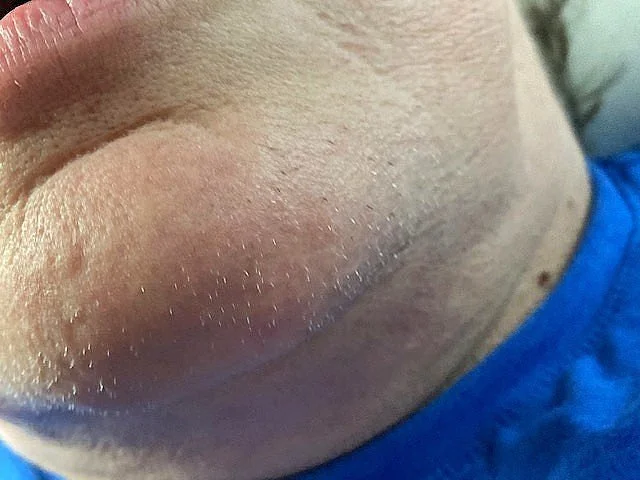
First treatment, September 2025
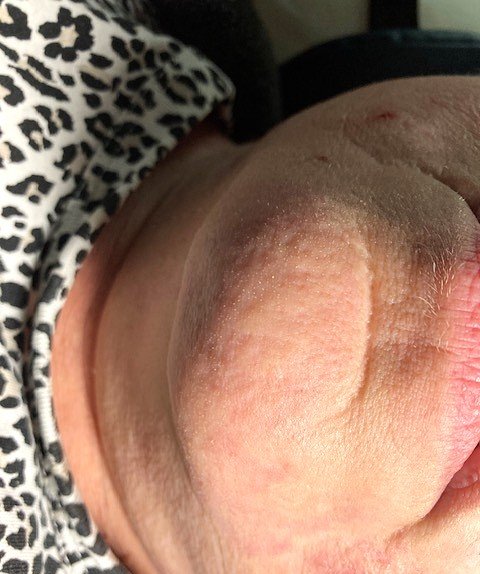
March 2026
Treatment schedule:
Weekly 1-hour sessions, Sept-Dec 2025
Bi-weekly 1-hour sessions, Jan 2026-present
Consistency pays off!
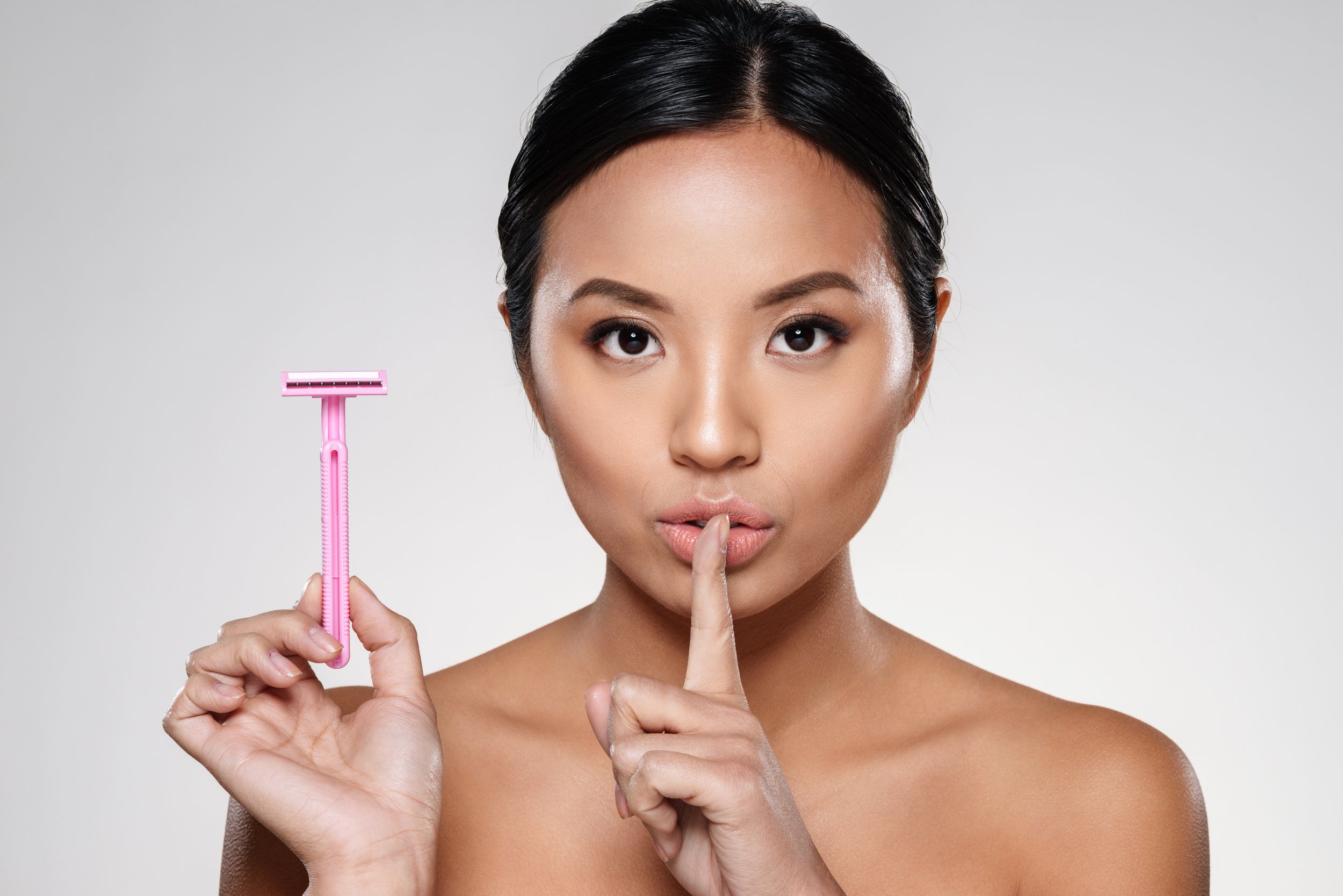
Ladies, Tired of secretly shaving your face?
Ladies, are you tired of secretly shaving your face?

Who isn’t?!
Stop spending time and money on hair removal methods that just DON’T work!
Electrolysis. Is. Permanent.
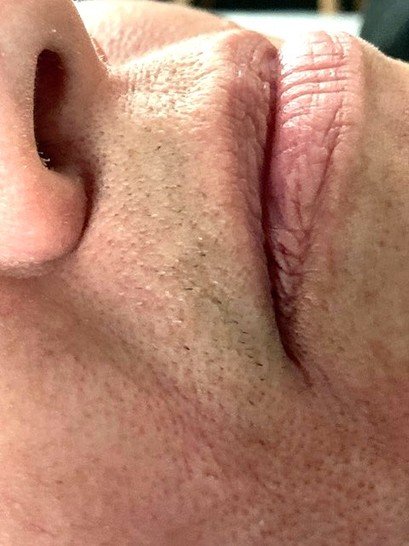
Not gonna lie… upper lip electrolysis is a bit painful, but SO worth it!
Upper lip facial hair. Before & After.
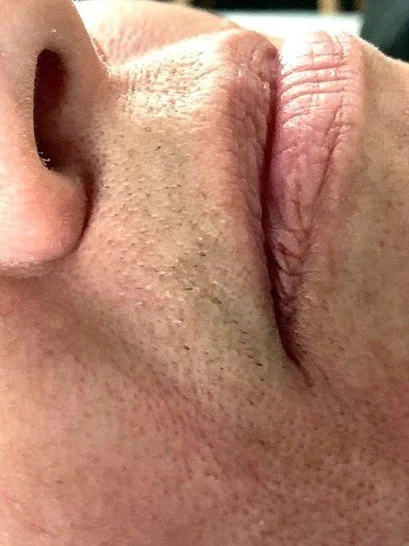
August 2025
At each visit, we prioritized the chin and neck and did just a few minutes of electrolysis on each upper lip corner.
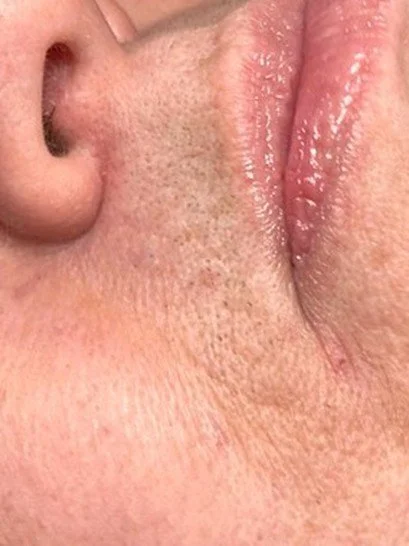
February 2026
Baby steps still (slowly) lead to a fabulous end result!
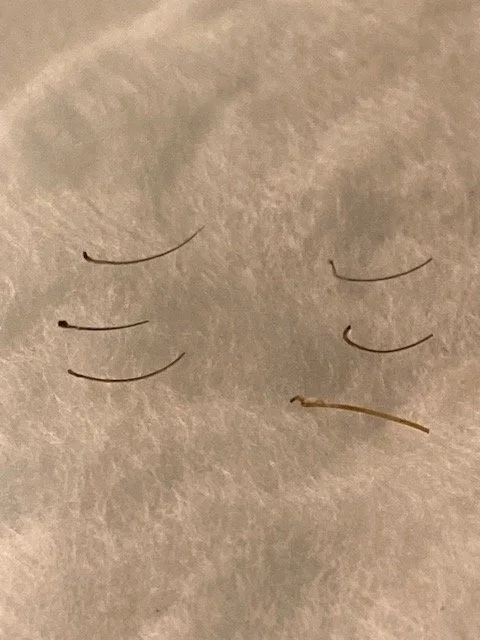
Stop tweezing & waxing!
Stop tweezing and waxing. Here’s why!
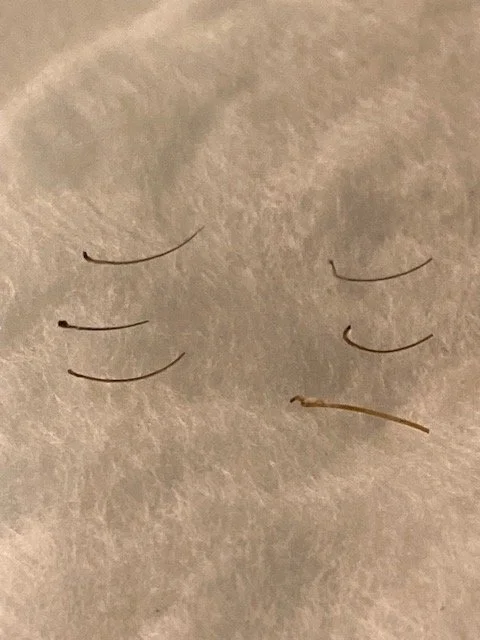
Normal, healthy hairs on the left side.
Distorted, hooked, hairs that were snuggled deep in scar tissue from years of tweezing, on the right.
When you yank your hair out of it’s follicle, by tweezing, waxing, or threading, you are essentially creating an environment that’s perfect for growing another deeper, more resilient, faster growing and harder to destroy hair. Here’s how:
Your skin floods healing nutrition to the ‘injury’ site. The follicle receives this and happily begins growing a healthy, more resilient new hair.
Over time, the skin surrounding these follicles develops thick and dense scar tissue just below the surface (that pink’ish hue you see around each of those really stubborn hairs), and the hair will now have to burrow in deeper.
The follicle itself becomes distorted, no longer straight, making the hair curved, misshapen and harder to extract, sometimes breaking off with the root still intact, setting you up for chronic irritation, inflammation and in-growns.
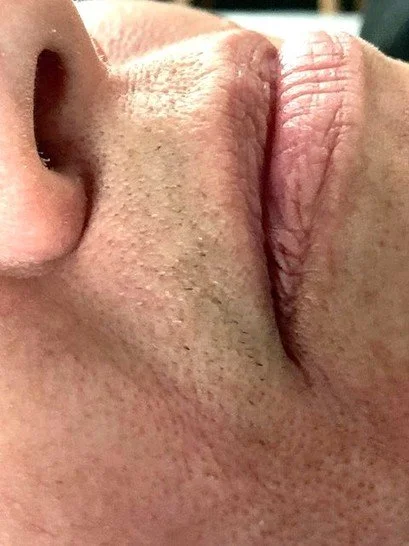
Not gonna lie… it’s a lil’ bit ouch-y, but soooo worth it!
Not gonna lie… it’s a lil’ bit ouch-y, but soooo worth it!
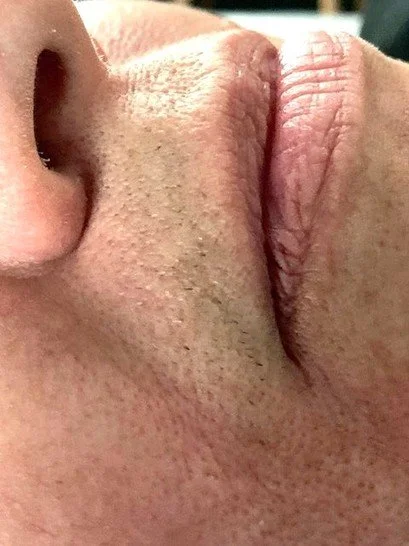
August, 2025
• Bi-weekly 45-minute treatments across face & neck, with ONLY 5-8 minutes spent on each upper lip corner, Sept – Oct 2025
• Monthly 5-8 minute up lip treatments, Dec 2025 - present
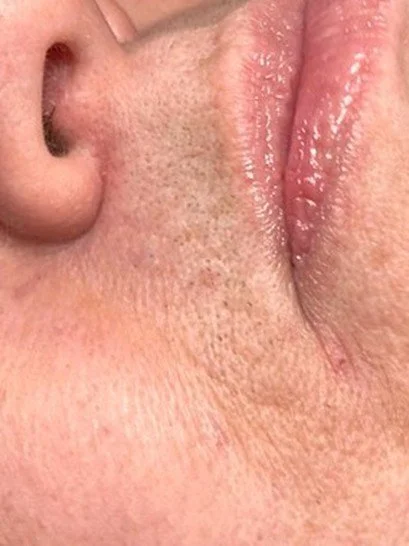
February 2026
Baby steps are perfectly fine, sometimes best, especially if the treatment area is tender or skin needs extra time to heal. The end result is further down the road, but the results are still spectacular and PERMANENT!
Electrolysis Truths:
It is a process, not a one and done. Hair by hair by hair…
It requires consistent treatments over many months, sometimes years. It’s a commitment of patience, time and money.
It is the ONLY permanent solution to unwanted hair growth.
The return on investment is huge:
~Self confidence
~Spontaneity (no more thinking, “Wait, I have to run home and shave first.”)
~Money saved (no more $$ spent on methods that don’t work)
~Time saved (how much time is spent tweezing, waxing, or going to laser appointments every day/week/month?), PEACE OF MIND.
YOU ARE WORTH IT!
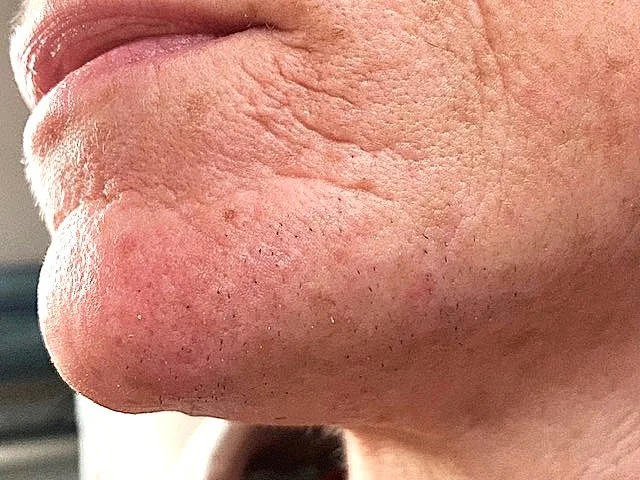
6 months of chin hair destruction! Before & After…
6 months of chin hair destruction! Before & After…
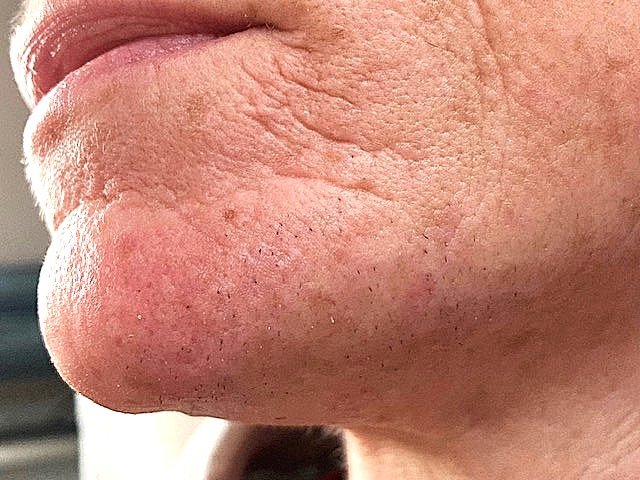
First treatment, June 2025
Treatment schedule: Weekly 45 minute sessions, June-July
Bi-weekly 30-45 minute sessions, Aug-Dec 2025
30 minute sessions, every 6 weeks, Jan 2026-?
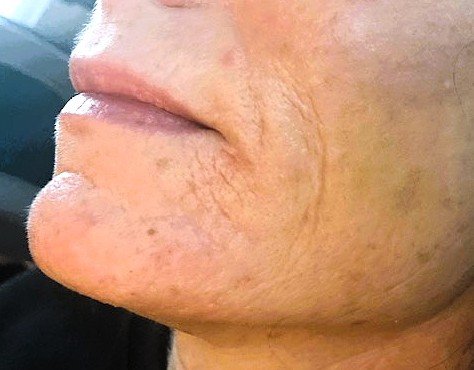
January 2026
Consistency pays off!
Patience & Consistency = Progress
Check out the progress that has happened in the last seven months.
The hair you see is NOT all the hair you have. There are many, many cycles of new hair growth to treat before seeing a difference.
Often, the, “Wow, I can really tell there is less hair” moment takes several months. Then, one day - BAM! You’re calling to push your next appointment out a week (or two) because you don’t have enough hair to bother coming in to treat. Wahooooo!
This will happen. Promise.
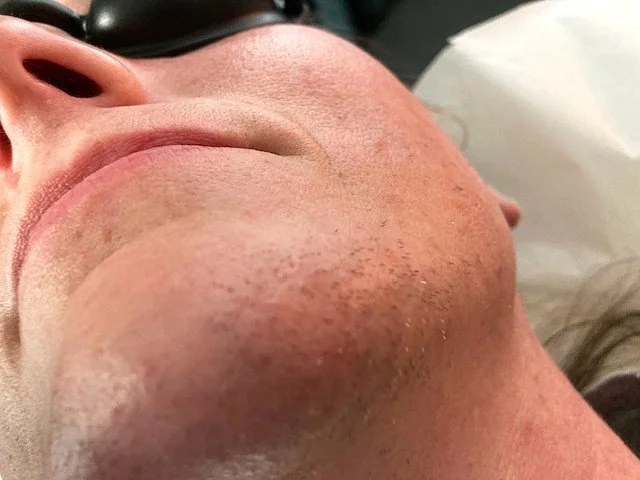
Before & After 6 months of treatments
Before and After 6 months of electrolysis treatments
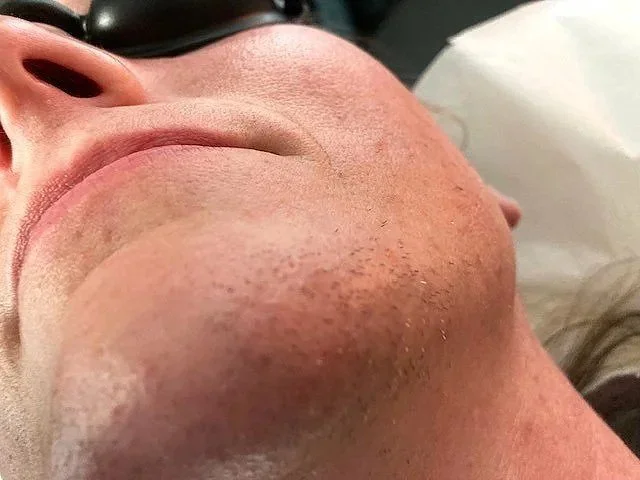
First treatment, June 2025
Treatment schedule:
Weekly 1-hour sessions, June-Sept 2025
Bi-weekly 1-hour sessions, Oct - Dec 2025
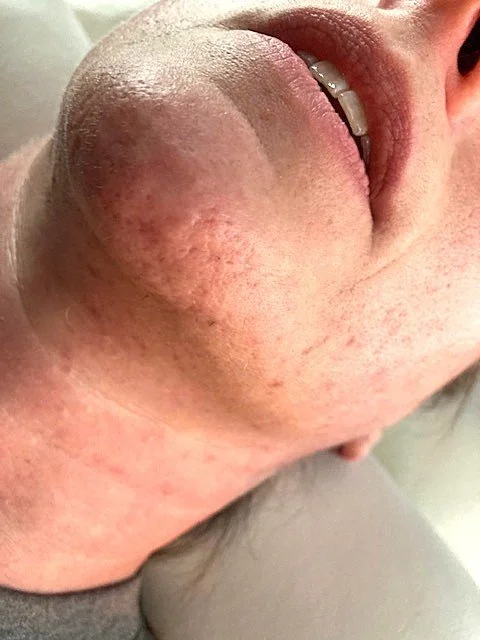
January 2026 - 6 months later
Treatment schedule:
1-hour sessions every 2-3 weeks, January 2026 - ?
PCOS Hair Growth: When hormones don’t play by the rules.
Polycystic Ovary Syndrome (PCOS) can trigger facial hair growth at any age due to hormonal imbalances, particularly elevated androgen levels. These hormones can stimulate excess hair growth on the face—most commonly on the upper lip, chin, jawline, neck, and sideburn areas. Facial hair related to PCOS may begin during adolescence, persist into adulthood, or develop later in life. Hormone influenced hair is persistent and the ongoing management is like rolling a boulder uphill.
Electrolysis to the rescue! Although a process and not a one-time treatment, it will PERMANENTLY destroy the area of the hair follicle responsible for growth, so another hair simply cannot grow.
When you’re tired of daily tweezing, monthly waxing, and expensive laser sessions, contact Like Velvet for a complimentary consultation. What do you have to lose? Except that chin hair!
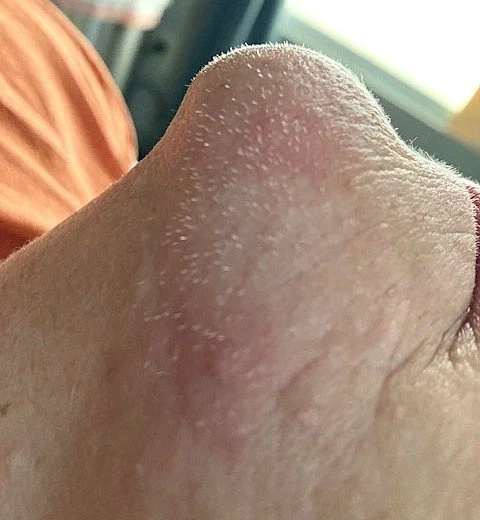
Before & After
Before and After 6 months of electrolysis treatments
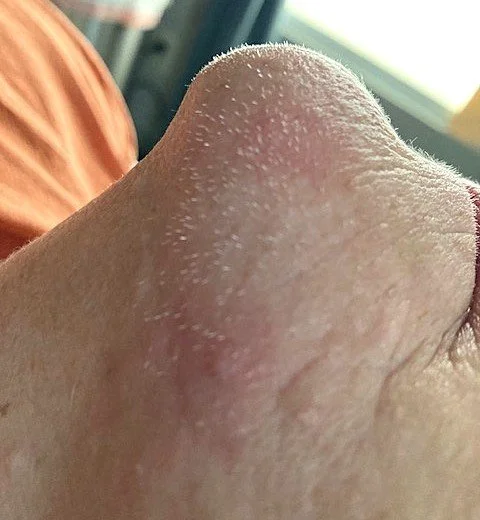
First treatment, June 2025
Treatment schedule:
Weekly 1-hour sessions, June-Sept 2025
Bi-weekly 1-hour sessions, Oct - Dec 2025
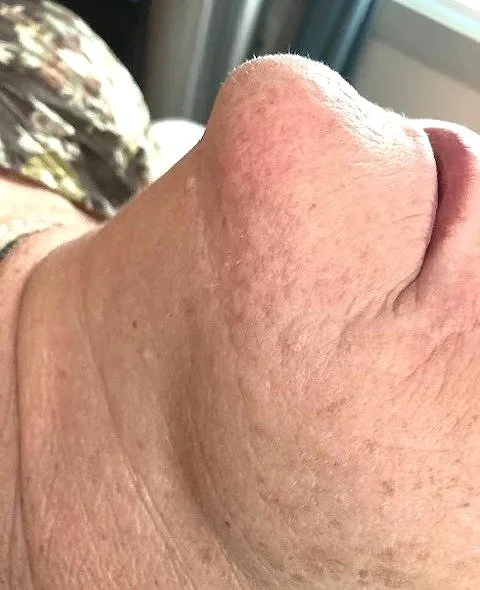
December, 2025
Treatment schedule:
1-hour sessions every 2-3 weeks, January 2026 - ?
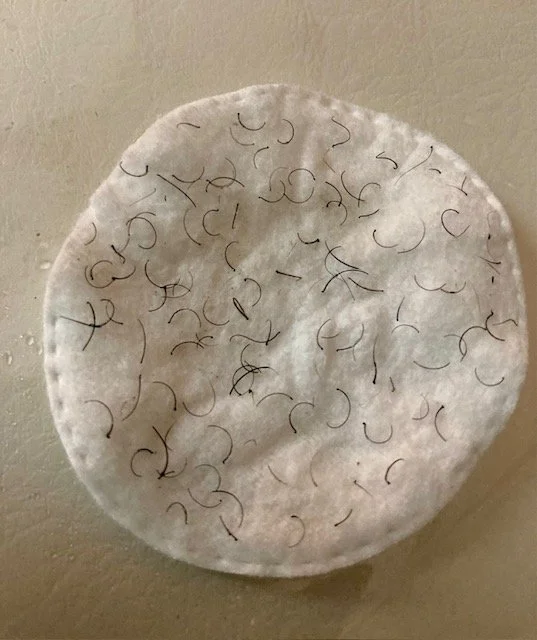
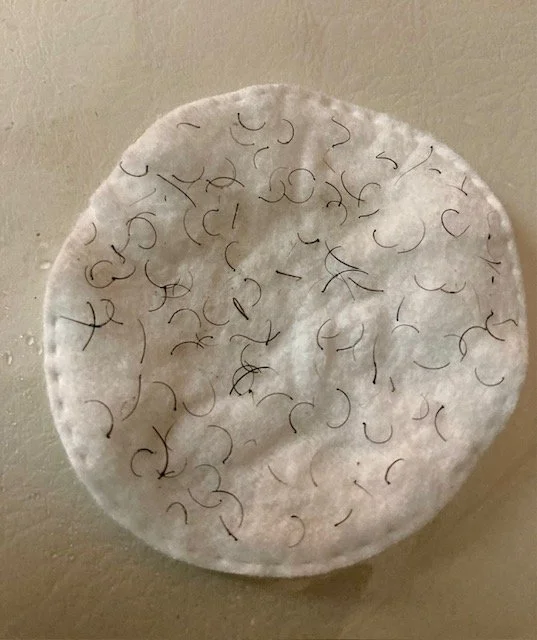
Whiskers on kittens are cute. Whiskers on your chin - not so much.
Successful treatment session

Wouldn’t you agree?
Hormonal Hair Growth: It doesn’t just clock in-or out-at puberty, pregnancy and menopause.
Check out the progress that has happened in the last seven months.
Hormone fluctuations can happen at any time during a woman’s life and facial hair is often an unwanted side effect. Get rid of it once and for all with electrolysis.
Hair removal = Peace of mind
Check out the progress that has happened in the last seven months.
Therese of Like Velvet Electrolysis has benefited my mind as well as my skin.
She explained the electrolysis process fully in the beginning. My skin is very sensitive and commercial products made my skin breakout and tweezing caused large red welts, adding to the stress of hair removal. Therese listened to my concerns and helped me find solutions to my unique situation.
Each session gets easier and the results are amazing. In the beginning I needed several days for my skin to really recover from each treatment. Now, within hours my skin has healed well.
I spent years timing my hair removal for special occasions and vacations. Today, I am no longer stressing about it.
Thank you Therese!
Client testimonial - October 2025

Client Success!
Check out the progress that has happened in the last seven months.
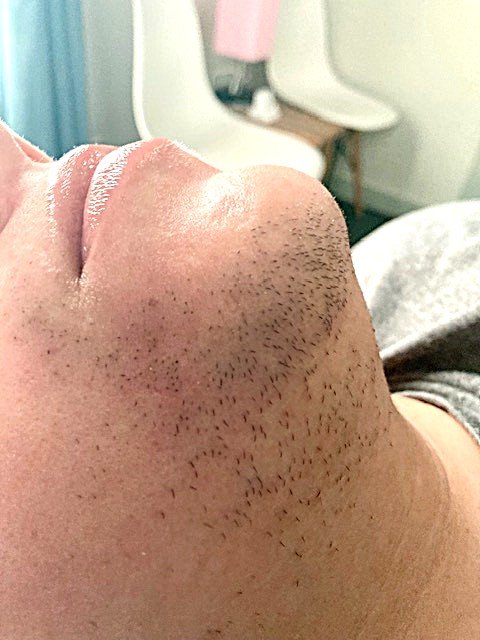
First treatment, August 2024

Update: March 2025
After 7 months of weekly 1-hour treatments, we’ve seen amazing results. The journey continues…

Laser or Electrolysis?
Which is best for you? Read more to find out what is most appropriate for you.
When it comes to long-term hair removal, laser and electrolysis are two of the most talked-about options—but they aren’t one-size-fits-all. In fact, for some people, electrolysis isn’t just the better choice—it’s the only choice.
Here’s why:
🔹 Hair Color Matters
Laser hair removal works by targeting pigment in the hair. That means it’s most effective on dark hair and lighter skin tones. If you have blonde, red, gray, or white hair, laser will not work at all. Electrolysis, however, doesn’t rely on pigment. It uses a tiny electrical current to destroy the follicle directly—regardless of hair color or skin tone.
🔹 Permanent Results
Laser offers “permanent reduction,” which means you might still see some regrowth over time. Electrolysis is FDA-approved for permanent hair removal, making it the only method that guarantees complete destruction of the follicle when done properly.
🔹 Precision
Electrolysis treats one follicle at a time, making it ideal for smaller areas like the upper lip, chin, or jawline.
Bottom line: If you're looking for a forever solution, laser isn’t the answer. Electrolysis is.

Finding Confidence Again
The benefit electrolysis brings to women struggling with PCOS.

Hormonally driven hair
For over a decade, Mary lived with the emotional and physical toll of Polycystic Ovary Syndrome (PCOS). Among the many symptoms she faced, one of the most persistent—and distressing—was unwanted facial hair. Shaving and plucking became a daily routine, one that slowly chipped away at her confidence. Everything changed when Mary finally decided to pursue electrolysis.
Electrolysis, a permanent hair removal method approved by the FDA, became a beacon of hope. Now, after 9 months of consistent treatments, Mary is already seeing significant progress. The frequency of new hair appearing has dropped dramatically and she’s even had full weeks without needing to touch a razor.
Electrolysis isn’t an overnight solution, especially when treating hormonally driven (very persistent) hair, but with dedication and consistency, results WILL follow!

Understanding Hair Growth Cycles: Why Patience Pays Off
When it comes to electrolysis for hormonal hair growth—especially from conditions like PCOS—understanding the hair growth cycle is key to setting realistic expectations.
When it comes to electrolysis, understanding the hair growth cycle is key to setting realistic expectations.
Hair doesn’t grow all at once. Each follicle operates on its own timeline, cycling through three main phases: anagen (growth), catagen (transition), and telogen (resting). Electrolysis is most effective during the anagen phase, when the hair is actively growing and still attached to the follicle.
Here’s where it gets tricky: hormonal fluctuations or imbalances, like those from PCOS, can cause dormant follicles to activate over time, which means new hairs can appear even months or years after treatment. It’s not regrowth from previously treated follicles—it’s growth from newly stimulated ones.

This is why electrolysis is a process. It often takes 12–24 months to fully treat an area. But with consistency, those active follicles are steadily destroyed, leading to permanent results.
So if you’re on this journey—be patient. Each session is a step closer to freedom from unwanted hair.